KLIK SAJA - In a major blow to U.S. President Donald Trump, the U.S. Court of International Trade has officially struck down the reciprocal tariff policy he implemented during his presidency.
The ruling, announced on Wednesday (May 28, 2025), marks a dramatic turning point in the long-standing debate over the limits of executive power in trade policy.
In its decision, the three-judge panel emphasized that the U.S. Constitution explicitly grants Congress, not the President, the authority to regulate trade with foreign nations.
The court concluded that Trump had overstepped the bounds of executive authority, even if his policy may have been considered economically effective by some.
The ruling permanently nullifies the sweeping tariffs enacted since January under the International Emergency Economic Powers Act (IEEPA).
The judges determined that Trump’s use of the IEEPA to impose broad tariffs lacked valid legal grounds.
“This use of the law is impermissible — not because it was unwise or ineffective, but because federal statute simply does not allow it,” the panel stated in its opinion.
Trump’s tariff measures were originally introduced under the claim that America’s trade deficit constituted a national security threat.
However, the court rejected this argument, stating that the IEEPA was intended for extraordinary crises, such as the freezing of hostile nations' assets — not as a tool to manage global trade policy.
Notably, the decision does not affect sector-specific tariffs — such as those on steel, aluminum, and automobiles — which were implemented under different trade statutes.
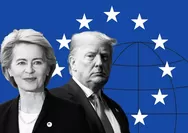
Still, the impact is profound: without the leverage of 10–54 percent tariffs, Trump’s strategy of pressuring trade partners like China and the European Union is now in serious jeopardy.
The White House responded forcefully. Spokesperson Kush Desai stated,
“It’s not the role of unelected judges to dictate how to address national emergencies.”
However, that statement does not change the fact that the court has upheld constitutional boundaries on presidential authority.
Meanwhile, financial markets reacted positively to the ruling. The U.S. dollar strengthened, and Asian stock indices surged, reflecting investor optimism over potential stabilization in U.S. trade policy.