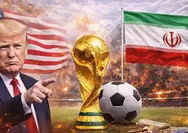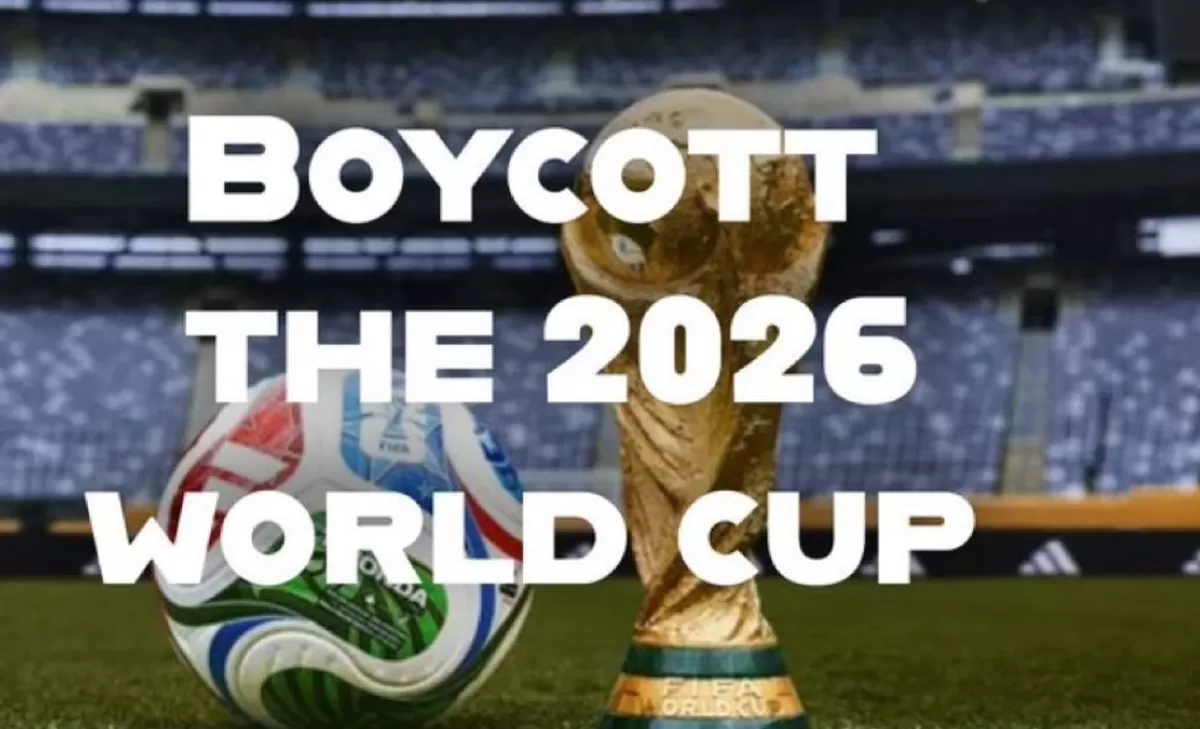
KLIK SAJA - Calls on social media for international football fans to boycott the 2026 FIFA World Cup are growing increasingly widespread.
The tournament is set to be hosted jointly by the United States, Canada, and Mexico.
Although boycott campaigns had already emerged in recent months—some driven by the high cost of tickets—the calls have intensified amid rising geopolitical tensions, immigration concerns, and a series of actions taken by the administration of U.S. President Donald Trump on the international stage.
These include Trump’s statement last Thursday night that the United States would begin targeting Mexico and launching operations against drug cartels.
This is particularly controversial given that Mexico is one of the official co-hosts of the 2026 World Cup.
On January 3, the Trump administration launched a military operation in Venezuela aimed at capturing President Nicolás Maduro and his wife, Cilia Flores.
The United States has accused Maduro, along with his wife, son, and several others, of being involved in a cocaine trafficking network linked to cartels designated as terrorist organizations.
Maduro has denied the allegations, asserting that the United States is seeking to gain control over Venezuela’s vast oil reserves.
In recent days, tensions have escalated further following the killing of activist Renee Good in Minneapolis, who was shot by an ICE immigration officer.
On the international front, the White House has also repeatedly expressed its desire for the United States to take control of Greenland, a self-governing territory under Danish sovereignty.
This has further inflamed the situation, given Greenland’s close geographic proximity to Canada, another World Cup host nation.
At the same time, Denmark—the authority responsible for Greenland—is currently competing in the World Cup qualification playoff stage, adding another sensitive dimension to the controversy.
The World Cup is the most popular football tournament in the world. During the 2022 edition in Doha, Qatar, more than 3.4 million spectators attended matches in person.
This is not the first time the World Cup has faced calls for a boycott.